Claim denials are a common challenge for many healthcare practices, but they are more than just paperwork issues. Each denied claim requires time and effort to correct, which can slow cash flow and increase operational costs. Studies show that reworking a single denied claim can cost between $25 and $118, and for practices handling dozens of denials every month, this quickly adds up to thousands of dollars lost in labor and delayed payments.
The best way to reduce these losses is through prevention. AI medical billing software helps identify errors before claims are submitted, verify provider details, and catch payer-specific issues early. By addressing problems proactively, practices can submit cleaner claims, receive payments faster, and save both time and money.
This guide aims to simplify the challenges of claim denials and provide a clear, practical look at how AI medical billing software can help practices reduce errors, save time, and protect revenue.
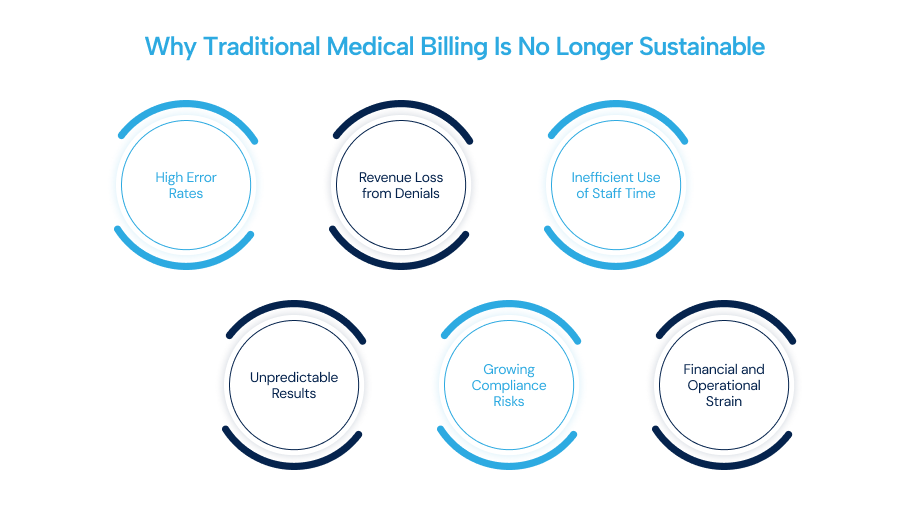
Medical billing once ran fairly smoothly when claims were simple, payer rules were limited, and volumes were manageable. Today, however, the landscape has changed. Increased paperwork, complex regulations, and stricter payer requirements have made manual billing workflows outdated and inefficient.
Studies and industry reports show serious flaws in traditional billing methods. According to a 2026 data overview, up to 80 percent of medical bills contain at least one error. Many of these errors originate during coding, data entry, or claim preparation, which are typically handled manually.
Mistakes such as incorrect codes, wrong patient details, missing modifiers, or incomplete documentation often lead to claim denials or delays. The result is lost revenue, extra administrative work to correct and resubmit claims, and slower payment cycles.
Manual billing consumes substantial staff time. Teams handle data entry, code reviews, payer follow-ups, denial management, and appeals, leaving little room for higher-value work. Over time, this workload can cause burnout and reduce efficiency.
Another major problem is unpredictability. Because manual medical billing relies heavily on human accuracy, outcomes can vary widely. Minor changes in workload, coding rules, or staff availability can trigger spikes in denials and delays, making revenue cycles harder to track and manage.
Compliance and payer regulations have grown more complex. As coding standards change or new payer rules are issued, manual billing teams must constantly stay updated. If they fail to do so, errors increase, denials become more common, and the risk of audits or penalties rises.
Traditional billing faces multiple pressures, including high error rates, wasted staff time, inconsistent results, growing complexity, and financial risk. For small and mid-size practices, relying on this model is becoming increasingly unsustainable.
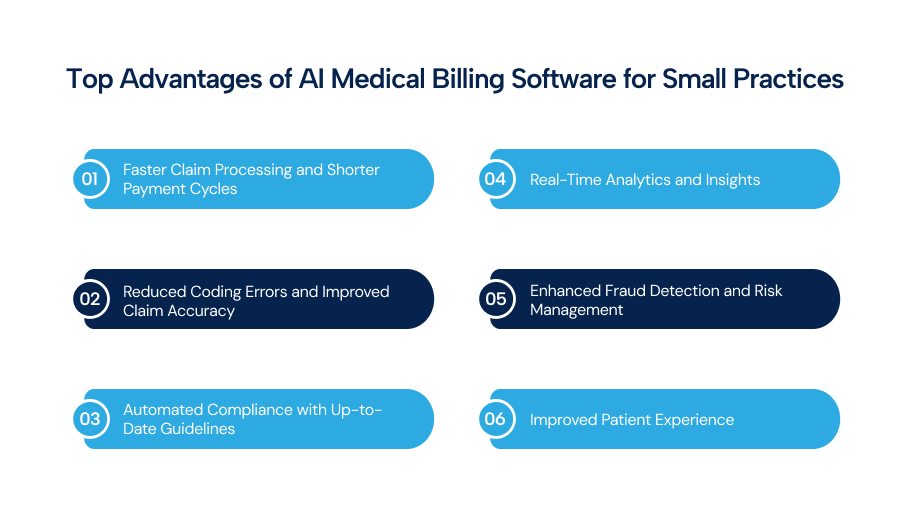
AI medical billing software streamlines the revenue cycle by automating routine tasks, such as coding, insurance eligibility checks, and claim scrubbing. This technology significantly minimizes claim denials, accelerates reimbursements, and reduces administrative overhead, allowing healthcare providers to maximize profitability while focusing on patient care.
Many small healthcare practices face delays in claims and payments due to manual billing. AI medical billing software for small practices speeds up this process by using Intelligent Document Processing, which combines machine learning, NLP, OCR, and RPA.
Research shows AI-driven IDP can reduce claim processing time by up to 80 percent, bringing it down from 4 to 6 weeks to just 24 to 48 hours. It also improves accuracy from 75 percent to 99.8 percent, even when handling handwritten or complex documents. RPA automates repetitive tasks, keeping claims moving smoothly without manual intervention.
For small practices, this means faster payments, fewer claim denials, and improved cash flow, making billing simpler, quicker, and more reliable.
Coding errors are one of the leading reasons healthcare claims are denied. Mistakes such as outdated or incorrect CPT and ICD codes, missing modifiers, or mismatched diagnosis-procedure combinations can result in rejected claims.
AI medical billing software for physicians helps address these challenges effectively. By automatically validating codes against payer rules and the latest coding standards, AI ensures claims are accurate before submission. Natural language processing analyzes clinical notes to confirm that documentation supports billed services, reducing denials due to insufficient justification. AI-powered claim scrubbing detects common errors, such as missing modifiers or duplicate entries, allowing corrections in real time. Studies show that practices using AI-driven coding validation experience significantly fewer denials and faster claim resolution, ultimately improving financial performance and operational reliability.
Healthcare billing codes such as ICD-10, CPT, and HCPCS are updated regularly. Using outdated codes can lead to claim denials, delayed payments, and compliance risks. According to industry sources, practices that fail to apply current codes face frequent rejections from payers.
AI medical billing software automatically keeps coding and payer rules current, including ICD-10, CPT, and HCPCS updates. Validating claims against these rules reduces errors, prevents denials, and ensures compliance with healthcare regulations. This automation eliminates the need for constant manual tracking, saving small practices time and administrative effort.
The software also generates detailed audit trails, documenting all code assignments and claim verifications. This makes internal and external audits easier and more accurate while helping practices avoid costly penalties. With AI-driven compliance, small practices can maintain accuracy, improve revenue, and focus on efficient operations.
AI medical billing software offers small practices real-time tracking of claims, denials, and overall revenue performance. The 2026 Experian Health report found that missing or inaccurate claim data causes 50% of denials. AI tools can flag these errors instantly, monitor trends, and provide actionable insights to prevent future denials.
With predictive analytics, practices can identify patterns in coding, authorizations, and patient registration data that often lead to delays. This enables staff to address issues proactively, ensuring faster reimbursements and better financial outcomes.
AI medical billing software improves fraud detection and overall risk management by continuously reviewing claims for unusual patterns and errors. Manual checks often miss mistakes or irregularities, which can lead to financial loss or compliance problems. AI uses advanced data analysis to spot duplicate claims, incorrect codes, or unusual billing activity before claims are processed.
Research shows that AI-powered systems can identify up to 50 percent more fraudulent claims before payment compared to traditional methods. This helps small practices reduce financial losses, maintain compliance with regulations, and secure revenue while keeping billing operations accurate and reliable.
AI medical billing software improves the patient experience by ensuring billing statements are accurate and easy to understand. Errors in claims or delays in processing often cause confusion and repeated calls for clarification. With AI checking claims for accuracy and submitting them promptly, patients receive correct statements, reducing misunderstandings and frustration.
The software also helps manage payment reminders and track outstanding balances efficiently. This makes it easier for patients to handle their healthcare costs and understand their financial responsibilities. Accurate and timely billing builds trust between patients and small practices, enhancing overall satisfaction and confidence in the care they receive.
AI medical billing software offers small healthcare practices a powerful way to reduce errors, accelerate claims, and maintain compliance with ever-changing coding and payer rules. By improving claim accuracy, speeding up reimbursements, detecting potential fraud, and providing real-time insights, these tools help practices protect revenue and operate more efficiently.
Beyond financial benefits, AI-driven billing also enhances the patient experience by delivering accurate, understandable statements and smoother payment processes. For small practices facing staffing limits and growing administrative demands, adopting AI medical billing software is an effective step toward stronger financial performance, reduced workload, and improved overall practice management.
What is AI medical billing software?
AI medical billing software automates medical coding, claim submission, and error checks using AI tools. It helps practices submit accurate claims, follow payer rules, and reduce denials.
How does it reduce claim denials?
The software detects errors in patient info, codes, and documentation before submission. This prevents common mistakes that cause denials and delays.
Can it help small practices stay compliant?
Yes, the best medical billing software updates ICD-10, CPT, and HCPCS codes automatically, ensuring claims meet current payer and regulatory standards.
Will it improve revenue and cash flow?
Yes, faster claim approval, fewer errors, and accurate billing allow small practices to receive payments quickly and reduce administrative costs.
Is it easy to implement?
Most AI billing solutions are designed for small practices. Integration with existing systems and staff training is straightforward, letting practices benefit quickly.
Optimize billing, claims and collections with expert RCM support let our professionals handle the process so you can focus on patient care.