A claim goes out on the wrong form, and three weeks later, your team gets a rejection notice that tells them almost nothing useful. That situation plays out constantly in practices and facilities that don't treat claim type selection as a front-end priority. According to a 2024 MGMA Stat poll, 60% of medical group leaders reported rising claim denial rates compared to the prior year (MGMA, 2024), and a portion of those denials trace directly back to claim form errors.
Understanding professional vs institutional claims before a charge is submitted can keep your billing team from chasing preventable rejections.
The core difference between institutional claims vs professional claims comes down to who submits the claim and what it covers.
| Feature | Professional claims | Institutional claims |
| Submitted by | Individual providers | Healthcare facilities |
| Claim form | CMS-1500 | UB-04 (CMS-1450) |
| Electronic format | 837P | 837I |
| Services billed | Provider rendered services | Facility-based services |
| Reimbursement method | Fee schedule (per CPT/HCPCS code) | Bundled (DRGs, APCs, per diems) |
| Typical settings | Physician offices, outpatient clinics | Hospitals, SNFs, home health agencies |
What that table doesn't show is how differently payers process institutional claims on the back end, which is where the real operational impact shows up in your revenue cycle.
Read a comprehensive guide on revenue cycle management to learn more.
A professional claim is what an individual provider submits for the services they personally delivered, from office visits and consultations to telehealth encounters and diagnostic interpretations.
Professional claims go out on the CMS-1500 form or its electronic equivalent, the 837P. Payers reimburse these claims using a fee schedule that assigns a dollar amount to each CPT or HCPCS code, which makes accurate medical coding essential for getting paid correctly.
Professional billing vs hospital billing comes down to who is billing and for what.
An institutional claim covers the facility side of a patient encounter. Hospitals, skilled nursing facilities, home health agencies, and ambulatory surgery centers submit these for inpatient stays, outpatient procedures, emergency department visits, and lab or imaging work performed within the facility.
The form for institutional billing is the UB-04, also called the CMS-1450, and its electronic version is the 837I. Compared to the CMS-1500, the UB-04 captures revenue codes, condition codes, occurrence codes, and value codes that don't exist on professional claims. Understanding how revenue codes work can prevent a surprising number of rejections.
An institutional bill type code is required on every facility claim. That three-digit code tells the payer the type of facility, the type of care, and the frequency of the bill. Getting one digit wrong causes a rejection, and what Medicare accepts doesn't always match what a commercial plan requires.
The ub 04 form used for institutional billing serves both paper and electronic submissions, though most facilities now submit the 837I electronically through a clearinghouse.
Patients often don't understand why they receive multiple bills for a single visit, and the answer becomes clear once you understand professional vs facility claims.
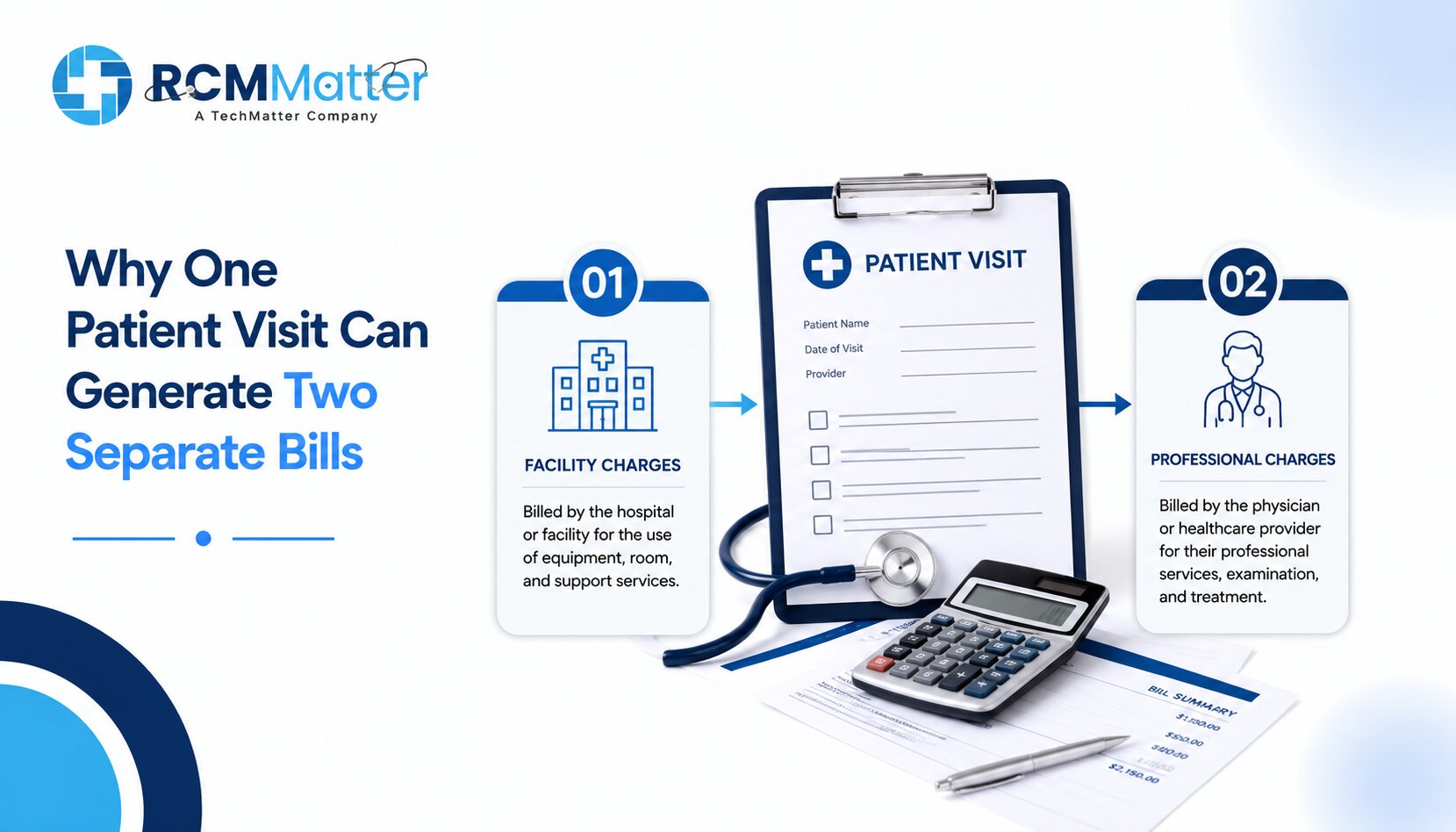
Facility claims cover the operating room, nursing staff, anesthesia supplies, medications, and equipment the hospital provides during a procedure. The hospital submits these charges on the UB-04.
Professional vs facility billing separates who provided the service from where it was provided. The surgeon, anesthesiologist, and any other participating providers each submit their own CMS-1500 claims for their individual work.
A single outpatient surgery can easily produce three or four separate claims. Facility billing staff prepare the UB-04, while each provider files separately on the CMS-1500. This is also where denial management gets complicated because you're tracking claim status across multiple submissions for one encounter.
Understanding professional claims vs institutional claims at this level helps billing teams coordinate both sides of these split encounters without missing charges or duplicating them.
Any experienced claim professional can tell you that the same handful of mistakes cause the majority of denials on both claim types.
Practices that outsource to a professional claims bureau or a dedicated billing partner often catch these errors before submission, but whether you handle billing internally or externally, these patterns deserve attention.
Wrong claim form for the service. Submitting a provider's service on a UB-04 or a facility charge on a CMS-1500 triggers a hard denial. The payer won't process it, and your team starts over, which eats into timely filing deadlines.
Revenue code mismatches. When the revenue code doesn't align with the procedure code or place of service, the payer rejects the claim. This is especially common in outpatient hospital settings where departments assign revenue codes independently.
Incorrect provider NPI. Professional claims require the rendering provider's individual NPI, while institutional claims require the facility's organizational NPI. Mixing these up, or submitting an NPI that doesn't match enrollment records, produces denials that are easy to prevent but slow to resolve.
Incomplete eligibility verification. If the patient's coverage lapsed or changed, no amount of clean coding saves that claim from rejection. Verifying before the visit prevents a whole category of denials.
Coding errors on professional claims. Wrong modifiers, outdated CPT codes, and diagnosis mismatches remain the top reasons for professional claim denials. Regular claim scrubbing catches most of these before submission.
The distinction between professional vs institutional claims comes down to whether you're billing for the provider's service or the facility's resources. Practices and facilities that treat claim type selection, form accuracy, and coding precision as front-end priorities see fewer denials, faster reimbursements, and less rework.
Strong professional medical billing processes, paired with clean institutional billing workflows, help protect revenue at every stage of the revenue cycle. At RCM Matter, we see firsthand how small errors in claim type selection and form submission can create avoidable downstream delays and denials.
If your organization manages both physician and facility billing, review your most recent denial reports for claim type or form-related rejections this week. These often represent some of the quickest opportunities for revenue recovery.
What is a professional claim in medical billing?
It's the claim an individual provider submits for services they personally delivered to a patient, covering office visits, surgical procedures, consultations, and telehealth encounters using the CMS-1500 form.
What is an institutional claim?
Hospitals, skilled nursing facilities, and other healthcare organizations use institutional claims to bill for facility-based services. These claims cover room charges, nursing care, lab work, and operating room costs. The billing process tends to be more complex than professional billing because of the number of departments and service lines that need to be captured on a single UB-04.
Which claim is submitted by institutions like hospitals?
Institutional claims on the UB-04. Every hospital billing department submits these for facility-level charges, and most payers now require the 837I electronic format.
What is the UB-04 form used for in medical billing?
The UB-04 captures facility-based charges: revenue codes, condition codes, bill type, and all the data elements payers need to process an institutional claim. Hospitals, SNFs, home health, and hospice providers all use it.
What is the difference between institutional and non-institutional claims?
Non-institutional claims are professional claims that individual providers submit for their services, while institutional claims come from facilities for facility-based care. The forms, reimbursement models, and data requirements differ significantly between the two. How those differences play out also depends on the payer, which is why your team should verify requirements plan by plan rather than assuming one approach fits every situation.
Optimize billing, claims and collections with expert RCM support let our professionals handle the process so you can focus on patient care.