Coding errors may seem minor, but even a small mistake can delay payment or trigger claim denials. This guide explains the correct tick bite ICD-10 codes, how to use them properly, common coding pitfalls, and why precise documentation matters for billing teams.
A tick bite occurs when a tick attaches to the skin and feeds on blood. While many bites are harmless, some can transmit infections such as Lyme disease or Rocky Mountain spotted fever.
Clinically, providers assess:
Location of the bite
Presence of infection
Signs of an allergic reaction
Whether the tick was fully removed
From a coding standpoint, these details determine whether the visit is billed as a simple insect bite, a removal procedure, or a complication-related encounter.
For patients, a tick bite raises the question: “Is this dangerous?”
For billing teams, it raises another question: “Which code accurately reflects this visit?”
There is no single universal code labeled “tick bite.” Instead, coding depends on the body site and encounter type.
The primary code category used for tick bites falls under:
W57.XXXA – Bitten or stung by a nonvenomous insect and other nonvenomous arthropods, initial encounter
This is the most commonly used ICD-10 code for tick bite during an initial visit.
Breaking It Down
W57 – Nonvenomous insect or arthropod bite
XXX – Placeholder characters
A – Initial encounter
For follow-up visits, the 7th character changes:
D – Subsequent encounter
S – Sequela
Proper sequencing is important. Typically, the bite location diagnosis is listed first, followed by the external cause code (W57.XXXA).
ICD-10 requires specificity. The anatomical site of the bite must be coded.
For Example:
S00.06XA – Insect bite (nonvenomous) of scalp, initial encounter
S30.860A – Insect bite (nonvenomous) of lower back and pelvis, initial encounter
In these cases, the tick bite ICD code includes:
The injury code based on the body site
The external cause code (W57.XXXA)
Failure to code the site correctly can result in incomplete claims or audits.
If the provider performs a removal procedure, documentation must support medical necessity. The ICD code for the removal of a tick is not separate. Instead, the diagnosis code reflects the bite, and the procedure is captured with the appropriate CPT code.
Read more; Icd 10 codes for tick removal
For Example:
CPT for simple foreign body removal
Diagnosis: Bite code + W57.XXXA
The diagnosis must justify the procedure. If documentation does not clearly state removal, billing may be questioned.
Accurate medical coding requires clear provider documentation. Here are essential guidelines billing teams should follow:
Coders must determine whether the visit is for an initial encounter, a subsequent encounter, or a complication. The seventh character extension (A, D, or S) should accurately reflect the treatment stage and documentation.
The primary diagnosis should reflect the injury site using the appropriate ICD-10 code for a tick bite from category W57. The anatomical location must be clearly documented to avoid vague coding.
External cause codes help explain how the injury occurred. While not always mandatory for reimbursement, many payers and state programs require them for reporting and statistical tracking purposes.
If the provider performs a removal procedure, the appropriate procedure code must be reported in addition to the diagnosis code. The ICD code for tick removal alone is not sufficient for procedural billing.
If the patient develops conditions such as Lyme disease or localized infection, those diagnoses must be coded separately. Proper sequencing ensures accurate reimbursement and reflects medical necessity.
Incomplete or vague documentation can lead to unspecified coding, which increases denial risk. Providers should clearly note the site, severity, treatment provided, and any follow-up instructions.
Common Coding Errors to Avoid | ||
| Coding Error | What Happens | Potential Impact |
| Missing 7th character | Claim lacks required extension | Immediate rejection |
| Using unspecified code | Ignores documented details | Audit risk |
| No complication code | Infection not reported | Underpayment |
| Missing procedure code | Removal not billed | Lost revenue |
| Incorrect sequencing | Diagnosis order wrong | Medical necessity issues |
| Skipping external cause codes | Reporting incomplete | Compliance concerns |
Each of these mistakes can lead to claim rejection or payment delay. Coding accuracy protects revenue and reduces audit risks for administrators and compliance officers.
Most tick bites are uncomplicated. However, complications may include:
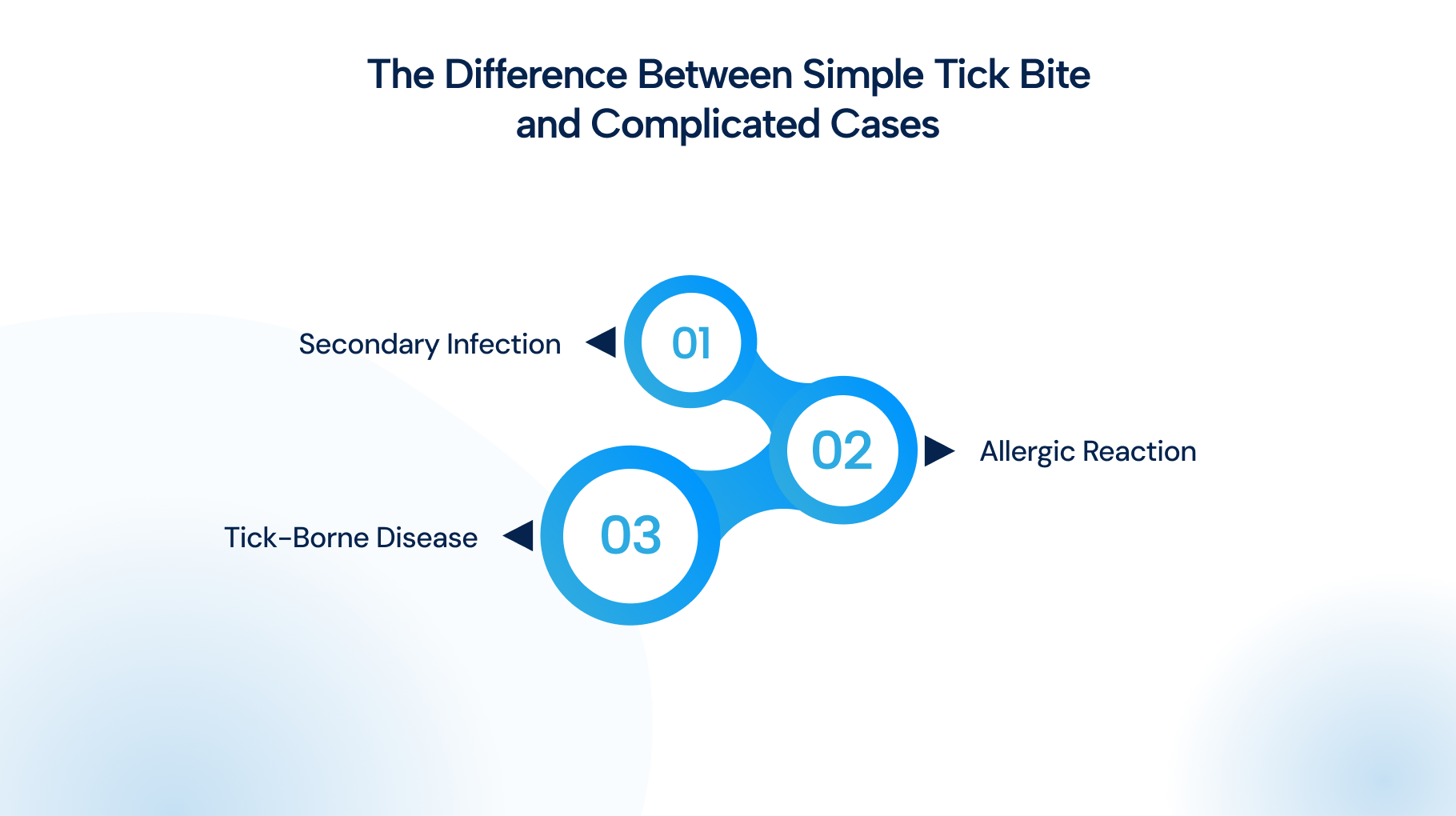
Secondary infection
Allergic reaction
Tick-borne disease
If Lyme disease is suspected or confirmed, the code shifts to A69.20 – Lyme disease, unspecified, rather than relying solely on the tick bite ICD entry.
The diagnosis must reflect clinical findings. Coding should never assume infection unless documented.
Accurate diagnosis coding does more than document a clinical condition. It directly affects reimbursement, compliance, reporting accuracy, and long-term revenue performance.
When coding tick bites correctly, providers protect both financial outcomes and regulatory standing.
Using the correct tick bite ICD-10 code ensures that claims align with documented services.
Proper coding supports medical necessity and reduces the likelihood of payer rejections or reduced reimbursements.
Incorrect or incomplete coding often leads to preventable denials. When documentation matches the selected ICD-10 code, billing teams experience smoother adjudication and fewer delays in payment processing.
Read more; Few simple steps to reduce denials in your medical practice
Precise coding demonstrates adherence to ICD-10 guidelines and payer requirements. During audits, accurate records help validate clinical decision-making and reduce compliance exposure.
Consistent and specific coding enhances reporting accuracy. Clean data allows healthcare organizations to track injury trends, identify recurring documentation issues, and strengthen overall revenue cycle performance.
Strong documentation is the foundation of accurate diagnosis coding and clean claims. When providers clearly record clinical details, billing teams can assign the correct codes and reduce reimbursement risk.
Specify the anatomical site of the tick bite. ICD-10 coding often depends on location specificity, and vague descriptions such as “tick bite on body” can lead to incorrect code selection or payer questions.
Indicate whether the visit is an initial encounter, a subsequent visit, or a follow-up for complications. This distinction affects the seventh character assignment in ICD-10 coding and directly impacts claim accuracy.
If the patient presents with rash, fever, or suspected Lyme disease, document those findings separately. Associated symptoms or confirmed infections may require additional diagnosis codes beyond the tick bite itself.
If the tick was removed during the visit, clearly document the method and extent of removal. This supports proper procedure coding and ensures alignment between diagnosis and services billed.
Accurate coding for tick-related encounters requires more than simply assigning a diagnosis. The tick bite ICD-10 selection must reflect the encounter type, anatomical site, and any related complications documented in the medical record. Small documentation gaps can lead to claim rejections, payment delays, or compliance concerns.
When providers and billing teams work together, coding becomes clearer, and reimbursement becomes more predictable.
Clear documentation, correct code selection, and structured medical billing workflows ensure claims are processed smoothly and revenue is protected. In today’s audit-sensitive healthcare environment, precision is essential, not optional.
1. What is the correct ICD-10 code for a tick bite?
The most commonly used code is W57.XXXA for an initial encounter, along with a site-specific injury code. The exact code depends on the anatomical location of the bite.
2. Is there a separate tick bite ICD code?
There is no single standalone code labeled exclusively for tick bites. Coding combines injury codes with external cause codes.
3. What is the ICD code for the removal of a tick?
The diagnosis reflects the bite. The removal itself is billed using a CPT procedure code supported by documentation.
4. Do all tick bites require complication codes?
No. Only documented complications such as infection or Lyme disease should be coded.
5. Should W57 always be used?
W57 is typically used as an external cause code in addition to the injury code. It should not replace the primary diagnosis.
Optimize billing, claims and collections with expert RCM support let our professionals handle the process so you can focus on patient care.