ICD-10 is something every medical group has to deal with, even if it’s not the most exciting part of running a practice. It’s detailed, technical, and sometimes confusing. But it’s also the backbone of how healthcare billing, reporting, and data tracking work today. Without accurate ICD-10 coding, even the best medical group billing services can face claim delays and payment issues.
So, what exactly is ICD-10, and how does it affect your medical group every day?
ICD-10 stands for the International Classification of Diseases, 10th Revision. It’s a global coding system created by the World Health Organization.
The purpose of ICD-10 is to standardize how medical conditions, symptoms, and procedures are documented across all healthcare systems.
In simple terms, ICD-10 turns a doctor’s diagnosis into a code that payers, billing teams, and health data systems can understand. It’s used in billing, insurance claims, and medical research. Every code tells the story of a patient’s condition, from the type of disease to how severe it is.
ICD-10 replaced ICD-9 because healthcare needed more detail. The older version had around 14,000 codes. ICD-10 expanded that to over 70,000, allowing for much greater precision. For instance, ICD-9 might label a “leg fracture,” while ICD-10 can specify which leg, which bone, and whether it’s the first or follow-up visit. That level of detail helps ensure the right reimbursement and better patient data accuracy.
Accurate ICD-10 coding is the foundation of smooth billing and consistent cash flow. When codes are correct, claims move through quickly, payments arrive on time, and compliance standards are met.
Even a single wrong digit can cause a claim rejection or delay. Fixing that error often takes extra time and back-and-forth communication with payers. For busy practices, this can quickly pile up, slowing down revenue cycles and creating extra administrative stress.
ICD-10 accuracy also impacts how your medical group is evaluated by payers and health agencies. Codes reflect the quality of care, risk levels, and patient outcomes. Inaccurate or incomplete coding can misrepresent your care data, which might affect performance scores or quality incentive programs.
Accurate coding keeps everything aligned. It helps your Medical Group Billing Services team avoid rework, reduces the risk of audits, and ensures that care and billing records tell the same story.
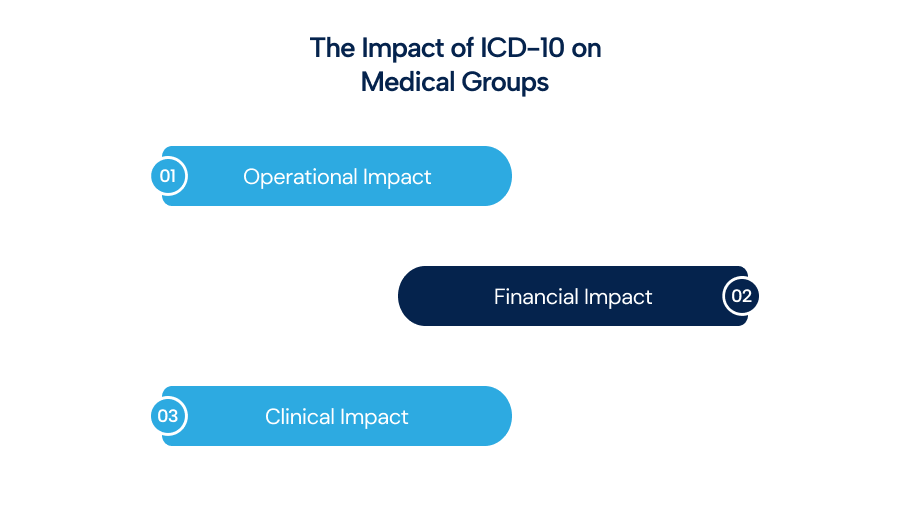
When ICD-10 first arrived, many practices didn’t realize how much it would reshape healthcare operations. It affected everything from clinical documentation to billing and compliance procedures.
Medical groups had to retrain their teams, upgrade systems, and adapt workflows. What used to be one quick code entry now requires a more detailed understanding of each patient visit. Billers and coders must work closely with providers to make sure every diagnosis and procedure is documented correctly.
The financial side of ICD-10 is significant. Better coding accuracy improves claim approvals and reduces denials. On the other hand, poor coding practices can result in lost revenue. That’s why many practices rely on professional medical group billing services that specialize in ICD-10 accuracy. Their trained coders help ensure that claims are compliant, complete, and submitted right the first time.
From a clinical perspective, ICD-10 provides more meaningful data. It helps identify disease trends, manage chronic conditions, and track patient outcomes more effectively. When codes are consistent and specific, your medical group can make better decisions based on accurate data.
Technology plays a big role in making ICD-10 manageable. Most Electronic Health Record (EHR) systems now come with built-in coding tools that suggest relevant ICD-10 codes based on documentation. These tools help speed up coding and reduce manual entry errors.
Automation and artificial intelligence are also becoming more common in billing systems. They can flag missing data, check code accuracy, and match documentation with payer rules. For many medical groups, this saves time and cuts down on denials.
Some practices choose to outsource to medical billing services that use advanced technology for coding and claim management. This approach helps reduce the administrative burden on in-house teams while maintaining billing compliance and efficiency.
Even after years of experience, ICD-10 continues to create challenges for many medical groups. Some of the most common issues include:
Solving these problems starts with better communication between providers and coders. Regular training sessions and internal audits help identify weak spots early. Many medical groups create a simple checklist to make sure every claim has complete information before submission.
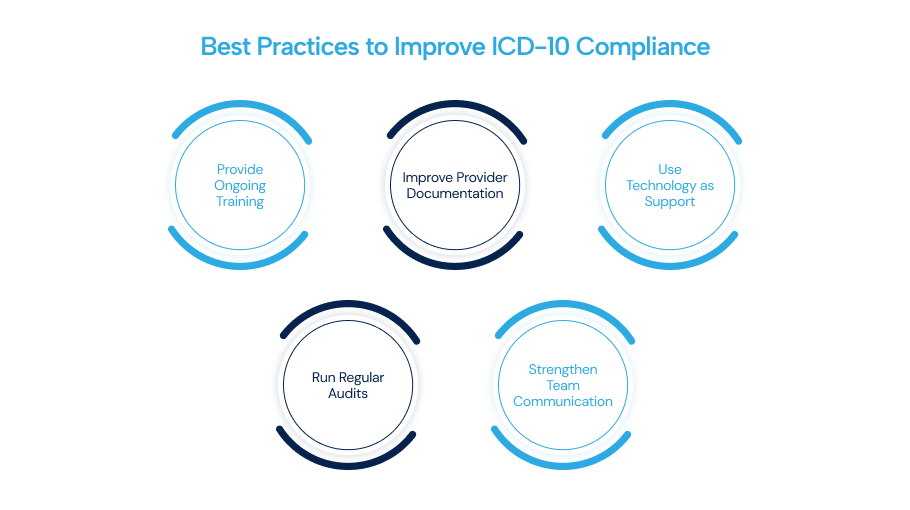
Improving ICD-10 coding doesn’t require a full system overhaul. Small, consistent changes can make a big difference over time.
Coding standards change every year. Continuous education helps staff stay current and confident in their work. Even short monthly reviews can prevent costly errors.
Accurate coding depends on detailed documentation. Encourage providers to include clear information about the condition, its cause, location, and severity. Better notes mean fewer follow-up questions for coders.
Let your EHR and billing systems help you, but don’t rely on them completely. Automation is useful, but human review ensures accuracy.
Periodic internal audits can uncover trends and common errors. Fixing those early helps prevent denied claims later.
Encourage coders and providers to talk openly. When questions are resolved quickly, errors go down, and accuracy goes up.
Ask yourself this: Is your billing team spending more time correcting mistakes than submitting clean claims? If yes, it might be time to review how ICD-10 is handled in your workflow.
ICD-11 is being developed to offer more detailed data and better digital compatibility. While the United States still uses ICD-10, it’s wise for medical groups to plan ahead. Preparing early will make future transitions easier.
Start by keeping your ICD-10 process strong. Consistent, accurate coding today builds a solid base for tomorrow. Stay updated on announcements from the CDC and WHO so you’re not caught off guard when new standards roll out.
Regular training also helps. A team that understands ICD-10 well will adjust to ICD-11 more easily. Make sure your EHR and billing software can handle future upgrades.
Finally, partner with billing experts who understand group practice billing and evolving code systems. Having experienced support keeps your practice compliant and ready for what’s next.
What is ICD-10, and why is it important for medical groups?
ICD-10 is the International Classification of Diseases, 10th Revision. It helps healthcare providers record and report diagnoses in a clear, standardized way. For medical groups, it ensures accurate billing and smoother insurance claims.
How does ICD-10 coding affect claim payments?
Accurate ICD-10 coding helps reduce claim denials and payment delays. Each code provides details about a patient’s condition, allowing insurers to process claims quickly and correctly.
What are the biggest challenges with ICD-10 coding?
The biggest hurdles are code complexity, documentation errors, and frequent updates. Even small mistakes can slow down payments or cause rejections, which makes consistent training essential.
How can medical groups improve ICD-10 accuracy?
Good documentation, regular audits, and better communication between providers and billing teams make a big difference. Many practices also rely on professional Medical Group Billing Services for added accuracy and compliance.
How can providers prepare for ICD-11?
ICD-11 will bring more detailed and digital-friendly codes. Staying updated, organizing internal processes, and partnering with knowledgeable billing professionals will make the transition smoother.
ICD-10 may not be the most exciting part of healthcare, but it’s one of the most important. It affects how your practice gets paid, how your care is measured, and how your data tells your story.
Accurate coding means cleaner claims, fewer denials, and faster payments. It also gives a clearer picture of patient care and outcomes.
In a busy healthcare environment, having reliable medical group billing services can make a real difference. With accurate coding, consistent workflows, and the right support, your medical group can focus less on billing problems and more on delivering quality patient care.
Optimize billing, claims and collections with expert RCM support let our professionals handle the process so you can focus on patient care.