Migraine disorders affect millions of patients each year. According to the American Migraine Foundation, nearly 39 million Americans suffer from migraines, making accurate diagnosis coding essential for proper reimbursement and compliance. Migraine ICD-10 Code G43.909 is commonly used in outpatient and neurology settings, yet billing errors remain frequent.
If your practice faces denials or delayed payments for migraine-related visits, this guide provides clear direction. It explains the clinical documentation requirements, coding rules, revenue cycle strategies, and denial-prevention methods associated with this diagnosis code.
Migraine ICD-10 Code G43.909 refers to migraine, unspecified, not intractable, without status migrainosus. It is used when the provider confirms a migraine diagnosis but does not document a more specific subtype.
The term “not intractable” indicates that the migraine responds to treatment.
“Without status migrainosus” means the episode lasts no longer than 72 hours. This code is frequently assigned in primary care and general neurology settings.
G43.909 should be reported when clinical documentation confirms migraine symptoms but lacks specification, such as chronic migraine or migraine with aura. If documentation clearly identifies a subtype, a more specific ICD-10 code must be assigned.
Using unspecified codes when details are available may lead to payer scrutiny. Proper selection depends entirely on what the provider documents in the medical record during the encounter.
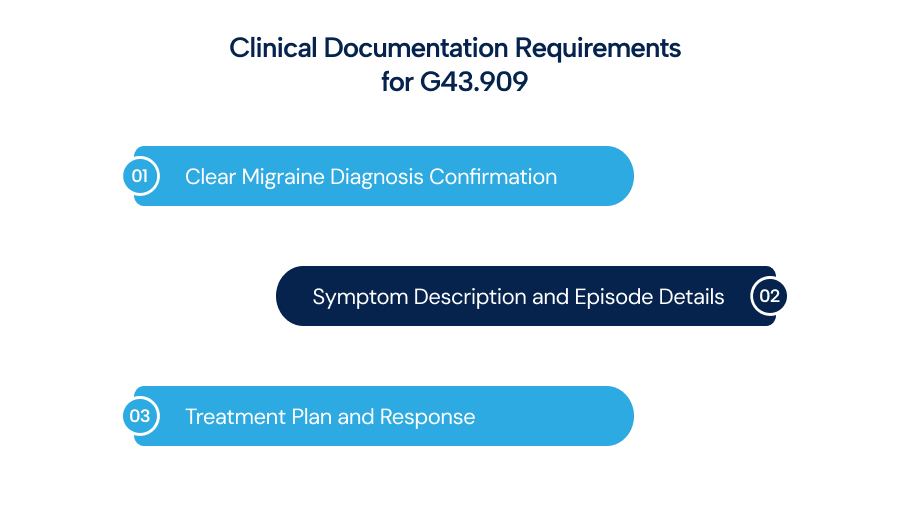
Accurate documentation directly influences coding accuracy. Incomplete or vague provider notes increase denial risk and delay reimbursement.
Providers must explicitly document the diagnosis as “migraine.” Terms such as “headache” or “possible migraine” are insufficient. The record should reflect clinical reasoning, symptom history, and diagnostic evaluation.
Documentation should also confirm that the condition is not intractable and that status migrainosus is absent. Clear terminology allows coders to assign G43.909 confidently and supports payer validation.
The provider note should describe symptom patterns, including severity, duration, triggers, and associated symptoms such as nausea or light sensitivity. Even though G43.909 is an unspecified migraine code, detailed symptom documentation strengthens medical necessity.
Payers often review whether the visit justified evaluation and management services. Comprehensive notes protect against reimbursement challenges.
The medical record should outline prescribed treatment, patient response, and follow-up recommendations. Documentation of medication effectiveness confirms the migraine is not intractable. If symptoms persist despite therapy, a different diagnosis code may apply.
Clear treatment documentation ensures consistency between clinical findings and coding decisions, which improves claim accuracy.
Coding migraine diagnoses requires careful review of provider documentation and adherence to ICD-10 guidelines.
Coders should use G43.909 only when the provider does not document a more defined migraine subtype. If aura, chronic migraine, or intractable status is mentioned, a different code must be assigned.
Selecting an unspecified code despite available details may be flagged during audits. Proper code selection protects both compliance and revenue integrity.
Migraine should be listed as the primary diagnosis when it is the main reason for the visit. Secondary codes may capture related symptoms or comorbidities if clinically supported. Correct sequencing ensures the claim accurately reflects the purpose of the encounter.
Payers review diagnosis orders when evaluating medical necessity for imaging, medication administration, or specialist referrals.
Headache codes should not replace a confirmed migraine diagnosis. If documentation confirms migraine, coders must report the appropriate migraine code instead of general headache classifications.
Symptom-only coding can lead to lower reimbursement or denial. Reviewing documentation carefully prevents unnecessary claim corrections.
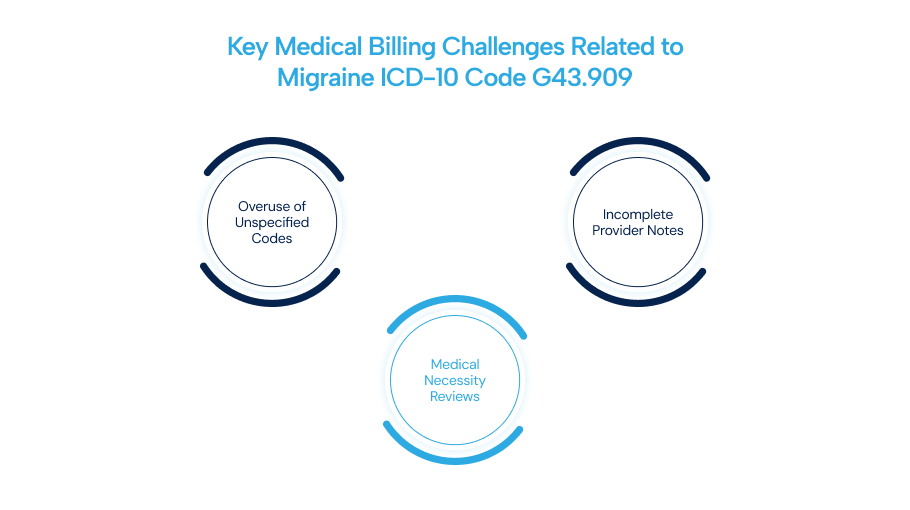
Migraine-related claims may appear straightforward, yet they frequently encounter processing delays. Several operational issues contribute to payment disruptions.
Repeated use of unspecified codes without a clear justification can attract payer attention. Insurers may question whether the provider assessed migraine subtype adequately.
Excessive reliance on G43.909 may suggest incomplete documentation. Periodic coding audits help identify patterns and encourage improved specificity.
When documentation lacks confirmation of migraine characteristics, coders may hesitate to assign the diagnosis confidently. Claims submitted without sufficient clinical support risk denial. Billing teams often spend additional time requesting clarification, which slows the revenue cycle. Structured documentation templates can reduce these delays.
Advanced imaging, injectable medications, or infusion therapies linked to migraine treatment often trigger payer review. If documentation does not justify the service intensity, reimbursement may be denied. Ensuring alignment between diagnosis, treatment plan, and billed services minimizes disputes.
Strong revenue cycle practices reduce denials and protect reimbursement for migraine-related services.
Billing teams should conduct internal reviews before submitting migraine claims. Diagnosis codes must align with provider documentation and procedure codes. Claim scrubbing software can detect inconsistencies early. Addressing errors before submission improves first-pass acceptance rates and shortens payment timelines.
Verifying patient eligibility at registration reduces downstream billing issues. Staff should confirm coverage for specialist visits, imaging studies, and prescribed therapies. Clear eligibility verification lowers administrative burden later in the revenue cycle. Accurate intake processes create smoother claim processing.
Tracking denial trends helps identify recurring issues such as insufficient documentation or incorrect sequencing. Regular analysis allows teams to correct errors promptly. Sharing feedback with providers supports stronger documentation practices. Continuous review strengthens long-term financial performance.
Implementing proactive measures protects reimbursement and reduces administrative rework.
Provider Education: Offer periodic training on migraine documentation requirements to reinforce clarity in diagnosis notes.
Coding Audits: Conduct internal audits to identify patterns of unspecified code overuse.
Template Optimization: Use structured electronic health record templates that prompt providers to document subtype, duration, and treatment response.
Payer Policy Review: Stay informed about insurer requirements for migraine-related imaging and medication approvals.
Migraine ICD-10 Code G43.909 plays a significant role in outpatient billing. Although it represents an unspecified migraine diagnosis, accurate documentation remains essential. Clear provider notes, careful code selection, and structured revenue cycle oversight reduce denial risk.
Healthcare organizations that invest in documentation quality and coding accuracy experience fewer payment disruptions. As payer scrutiny increases, precision in migraine coding will continue to influence financial stability and compliance outcomes for healthcare practices.
What does Migraine ICD-10 Code G43.909 indicate?
It indicates migraine, unspecified, not intractable, without status migrainosus.
When should G43.909 be avoided?
It should not be used if documentation specifies chronic migraine, migraine with aura, or intractable status.
Can headache codes replace migraine codes?
No. If migraine is confirmed, the appropriate migraine diagnosis code must be reported.
Why are migraine claims denied?
Common causes include incomplete documentation, incorrect diagnosis sequencing, or lack of medical necessity support.
How can practices improve migraine claim approval rates?
Strengthening documentation, reviewing payer policies, and monitoring denial trends help maintain steady reimbursement.
Optimize billing, claims and collections with expert RCM support let our professionals handle the process so you can focus on patient care.